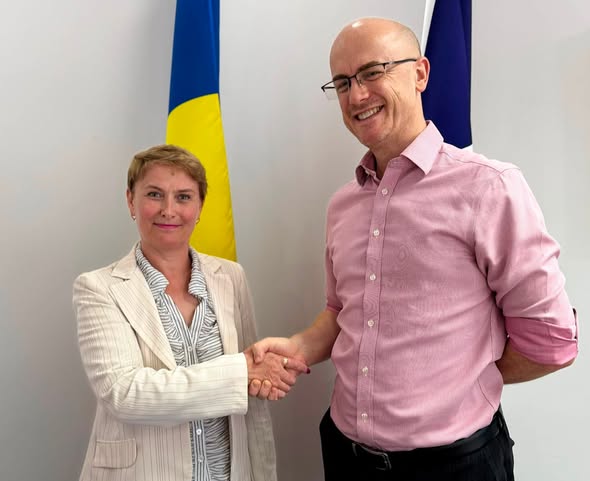
Economic Diplomacy in Action: UK and Moldova
By Dina Railean, Honorary Consul of the Republic of Moldova in Manchester
Diplomacy creates the greatest value when a meeting leads to practical action.
Formal discussions matter. However, businesses also need credible introductions, current market knowledge and people who can help them navigate an unfamiliar country.
That principle guided my first official meeting with the British Embassy in Chisinau since becoming Honorary Consul of the Republic of Moldova in Manchester.
On 19 August 2026, I met Robert “Bob” Easton, Deputy Head of Mission, at the British Embassy in Chisinau.
Our conversation focused on how the British Embassy and the Honorary Consulate could support stronger links between the United Kingdom and Moldova.
We discussed:
- Trade and investment
- British companies entering Moldova
- The Moldovan community in the UK
- Education and academic cooperation
- Tourism and cultural exchange
- Direct air connectivity
- Support for the First UK Business-Led Trade Mission to Moldova
Each subject connects people-to-people relationships with measurable economic opportunity.
From diplomatic dialogue to commercial action
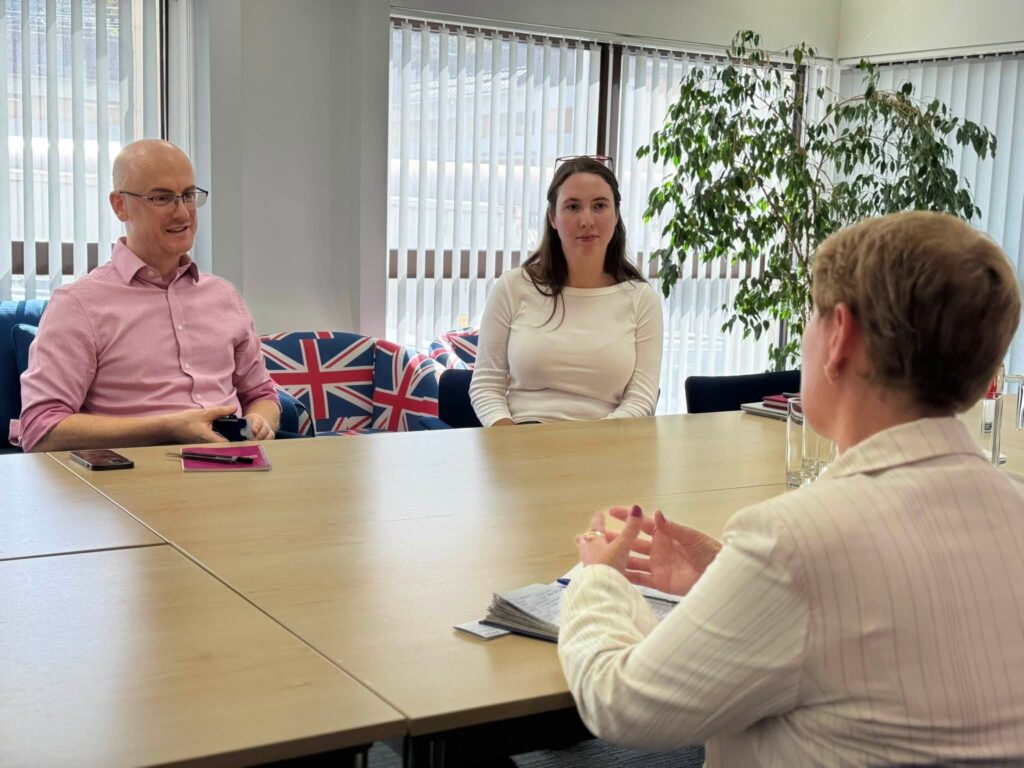
The British Embassy later described the meeting through its official social-media channels as an opportunity to discuss the Moldovan community in the UK, the work of the Honorary Consulate and the strong people-to-people ties that bring our countries closer.
Those ties provide a strong foundation.
Yet relationships create economic value only when institutions, businesses and communities turn them into action.
For that reason, economic diplomacy must move beyond formal meetings. It should connect:
- Businesses with potential partners
- Investors with reliable information
- Exporters with new markets
- Universities with research opportunities
- Airports with evidence of passenger demand
- Logistics companies with emerging trade corridors
- Professional advisers with companies that need their expertise
The Honorary Consulate can support this work as an economic front door to Moldova in North West England.
It cannot replace government departments, investment agencies or professional advisers.
Instead, it can help businesses find the right door, ask better questions and start credible conversations.
A timely UK-Moldova trade relationship
The United Kingdom and Moldova already have a formal framework for closer economic cooperation.
In April 2026, officials held the second UK-Moldova Dialogue in Trade Configuration. Both countries recognised stable and growing bilateral trade, alongside progress in Moldovan exports such as textiles, agri-food products, wine and electrical goods. They also agreed to continue technical discussions on customs, rules of origin and other trade matters.
This institutional work matters because trade depends on more than demand.
Companies also need clear rules, efficient customs procedures, trusted partners and confidence that both governments want the commercial relationship to grow.
Consequently, the next task involves translating policy-level progress into opportunities for individual businesses.
Taking British businesses directly to Moldova
During my meeting with Bob Easton, I explained that Paul Kallee-Grover MBE and I would lead the First UK Business-Led Trade Mission to Moldova.
Paul serves as a Department for Business, Innovation, Science and Trade Export Champion and Managing Director of Ki Partnerships Ltd.
Moldovan Diaspora Business Alliance Ltd and Ki Partnerships Ltd have organised the mission in association with Express Language Solutions Ltd.
Our delegation arrives in Chisinau on 27 September and will participate in Moldova Business Week from 28 September to 2 October 2026.
The mission has a maximum of ten businesses.
That deliberately small format allows us to understand each delegate’s goals and pursue more relevant introductions.
Participants receive:
- A pre-mission needs assessment or strategy call
- A language and business-culture briefing
- Access to Moldova Business Week
- Sector-specific introductions
- Meetings with institutions and businesses
- Market and regulatory insight
- Support throughout the visit
- A one-to-one post-mission debrief
- Help identifying practical next steps
Moldova Business Week will bring together investors, exporters, financial institutions, companies and public decision-makers. Its three central priorities are European economic integration, investment attraction and export growth.
Therefore, the mission gives British companies a chance to examine the market directly rather than relying only on reports or second-hand impressions.
Why North West England should pay attention
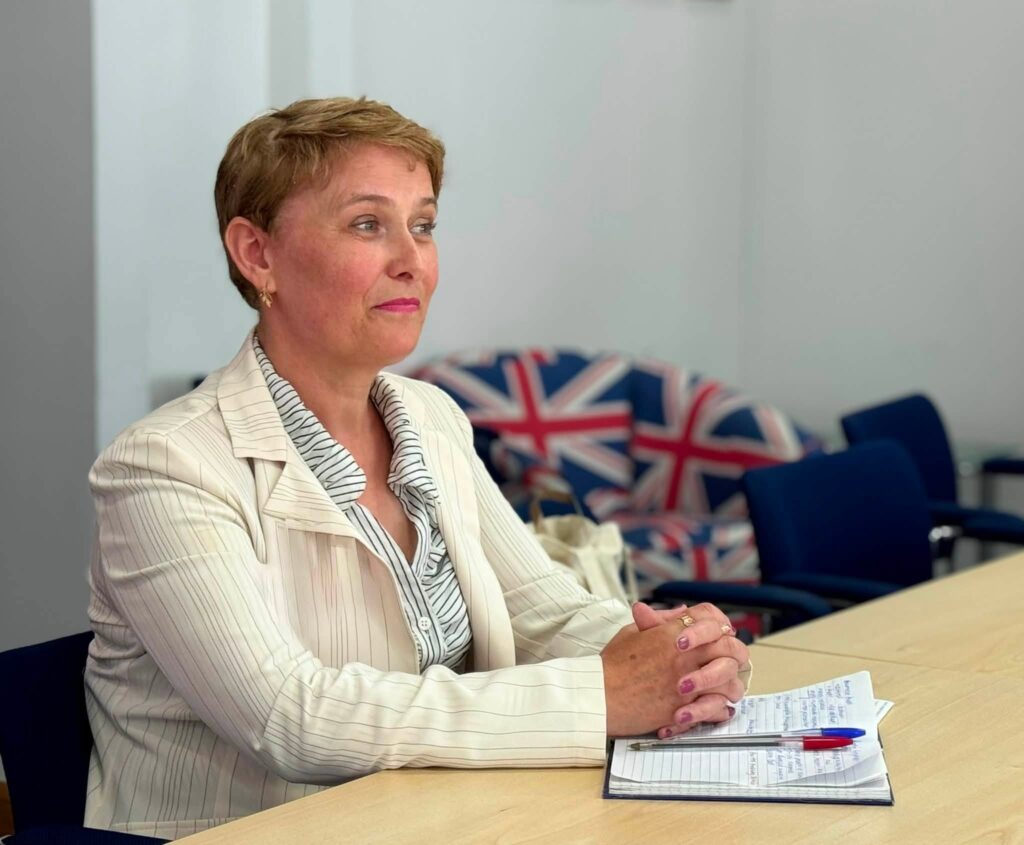
Greater Manchester and the wider North West possess many of the capabilities that Moldova needs as its economy develops.
Legal, insurance, finance and accountancy firms can support international contracts, risk management, investment structures and regulatory compliance.
Technology companies can explore opportunities in digital services, cybersecurity, business process outsourcing and innovation.
Construction and engineering businesses can assess infrastructure, energy and property projects.
Meanwhile, universities can build relationships through:
- Joint research
- Innovation partnerships
- Knowledge transfer
- Student and academic exchanges
- University-business collaboration
- Graduate talent pipelines
Such partnerships would benefit both countries.
Moldovan institutions would gain access to British knowledge and networks. North West organisations would develop experience in a market that sits at an important regional crossroads.
Connectivity is economic infrastructure
Direct flights support much more than family travel.
They help businesses visit customers, universities exchange students, investors inspect projects and tourists discover a country.
I previously helped build the business and community cases for the Liverpool-Chisinau route launched in 2020 and the Manchester-Chisinau route launched in 2024.
Both services remain suspended.
Nevertheless, the demand they revealed should inform future discussions with airports and airlines.
Restoring a sustainable Manchester-Chisinau or Liverpool-Chisinau connection remains a strategic objective.
Any future route would need a credible commercial case. That case should consider diaspora travel, tourism, education, business demand and possible freight opportunities together.
Moldova’s European direction changes the business case
Moldova’s EU accession process also carries direct commercial importance.
The country gained candidate status in June 2022, formally opened accession negotiations in June 2024 and opened negotiations on the fundamentals and external-relations clusters during 2026.
Accession remains a demanding and merit-based process.
Even so, closer alignment with European rules and standards can support a more familiar environment for international businesses.
For investors, the most relevant developments include:
- Regulatory convergence
- Stronger institutions
- Improved infrastructure
- Clearer standards
- Greater market integration
- More predictable investment conditions
- New procurement and partnership opportunities
British businesses should monitor these changes now.
Waiting until every reform is complete may mean arriving after stronger positions and partnerships have already formed.
Preparing responsibly for Ukraine’s reconstruction
Moldova may also support future activity connected with Ukraine’s recovery.
British companies should approach this opportunity carefully.
No location can guarantee access to contracts or tenders. Businesses will still need suitable experience, compliant procurement processes, credible partners and a clear understanding of risk.
However, Moldova’s position beside Ukraine and Romania gives it potential value as a base for logistics, professional services, investment and cross-border cooperation.
Invest Moldova describes the country as a possible “gateway economy” and identifies the Ukrainian regions of Odesa, Vinnytsia and Chernivtsi as part of a natural corridor connecting Ukraine with Moldova, Romania and the European Union.
Accordingly, British companies interested in reconstruction should examine whether relationships, regional expertise, local partners or an operational presence in Moldova could help them prepare.
Setting up an office should follow careful commercial and legal assessment.
First, companies should visit the region, understand future tendering requirements and build trusted relationships.
Building bridges that businesses can cross
This meeting at the British Embassy forms part of my wider Building Bridges thought-leadership series.
The central idea remains consistent.
Diplomacy should build practical bridges between:
- Governments and businesses
- Manchester and Chisinau
- Capital and opportunity
- Universities and employers
- Diaspora knowledge and international investment
- Moldova’s economy and European markets
- Today’s commercial relationships and tomorrow’s reconstruction needs
The Honorary Consulate will continue to support that work across North West England.
Businesses can use it as a first point of contact when exploring Moldova, seeking relevant connections or considering bilateral initiatives.
Enquire about last-minute mission availability
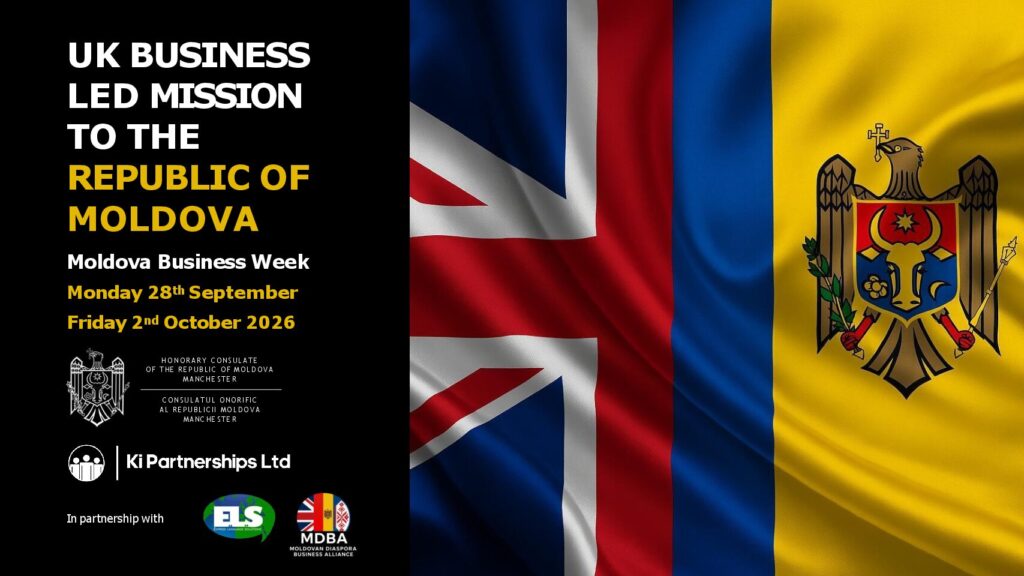
The formal deadline for the First UK Business-Led Trade Mission has now passed.
However, businesses with serious interest should contact me immediately regarding any last-minute availability.
Email RM.Honorary.Consul@gmail.com.
Further information appears on the official mission page.
Readers can also follow my work through:
This article continues my thought-leadership series on economic diplomacy and investment diplomacy.

Express Language Solutions Ltd and Moldovan Diaspora Business Alliance Ltd sponsored this article.
I thank ELS and MDBA for their continued support for UK-Moldova trade, diaspora engagement and investment diplomacy.
Law firms, insurers, accountants, banks, universities, logistics providers, airlines, technology companies, construction firms and other trade stakeholders can sponsor future articles in the Building Bridges series.
Please contact RM.Honorary.Consul@gmail.com to discuss sponsorship privately.
The question is no longer whether Moldova deserves the attention of British business.
The practical question is which businesses will take the time to understand the market, build relationships and decide whether there is a place for them in its next chapter.
About the Author
Dina Railean is the Chief Executive Officer of Express Language Solutions Ltd, Salford President of the Greater Manchester Chamber of Commerce, Honorary Consul of the Republic of Moldova in Manchester, Chair and Chief Executive Officer of the Moldovan Diaspora Business Alliance, and a Council Member of The Insurance Institute of Manchester.
Through her work across business, diplomacy and professional leadership, she writes about international trade, foreign direct investment, cross-cultural communication, leadership and the strategies that help organisations build trust and succeed across borders.