Why Romanian GCSE Matters for the Future of the United Kingdom, Moldova and Romania
Language Is More Than a School Subject
What if one school subject could help strengthen cultural identity, improve educational outcomes, support international trade, and build stronger links between the United Kingdom, Moldova, and Romania?
That is precisely why the campaign to introduce Romanian as a GCSE subject deserves serious attention.
As Honorary Consul of the Republic of Moldova in Manchester, with responsibility for the North West of England, one of my priorities is supporting initiatives that strengthen educational opportunity, cultural understanding, and community engagement.
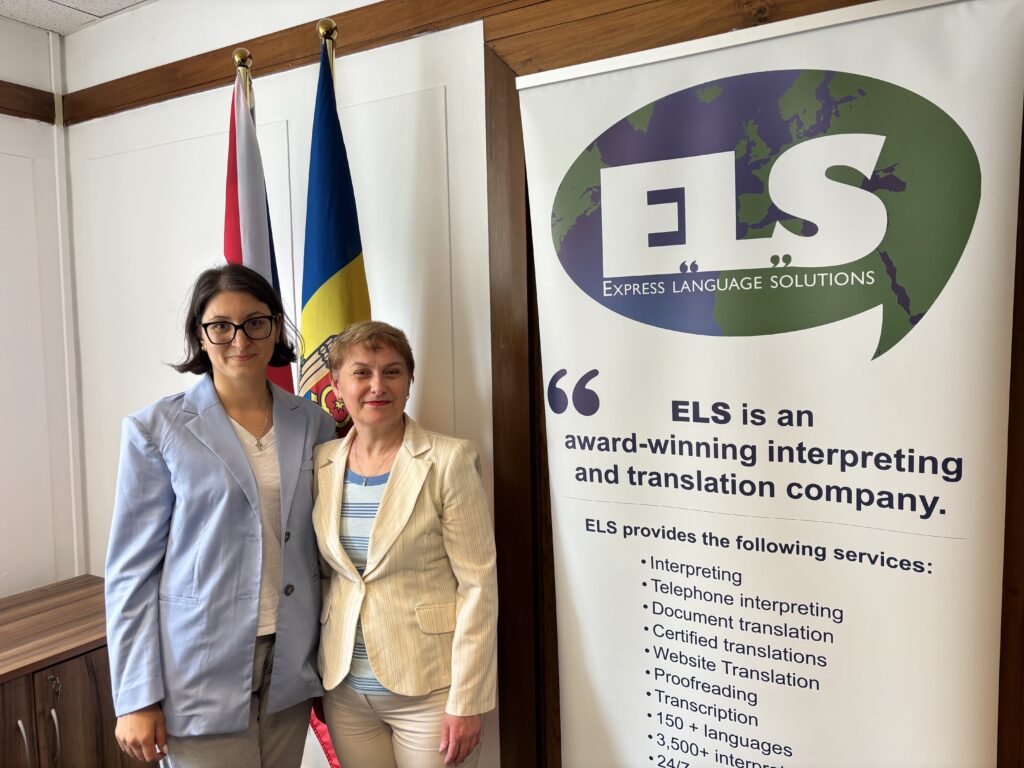
Recently, I had the pleasure of meeting with Mrs Alesea Tudosan, a qualified teacher in both the Republic of Moldova and the United Kingdom, and a passionate advocate for Romanian language education.
Our discussion focused on the ongoing petition calling on the UK Government to approve Romanian as a GCSE subject and to support the development of examinations and teacher training.
Following our conversation, I am pleased to confirm my full support for this important initiative.
Why This Matters
According to the latest census data, there are now more than half a million Romanian-born people living in the United Kingdom.
Romanian has become one of the most widely spoken community languages in the country.
Yet despite the size and contribution of this community, Romanian remains largely unavailable as a GCSE subject.
This creates a gap that many families, educators, and community leaders believe should be addressed.
Introducing Romanian GCSE would:
• Support linguistic diversity
• Promote educational inclusion
• Help young people connect with their heritage
• Recognise the contribution of Romanian-speaking communities
• Encourage multilingualism
• Create new educational opportunities
Furthermore, it would better reflect the linguistic reality of modern Britain.
A Shared Language Across Two Countries
Many people do not realise that Romanian is the official language of both Romania and the Republic of Moldova.
Consequently, supporting Romanian language education benefits engagement with two important European countries.
This creates opportunities far beyond the classroom.
Students who develop Romanian language skills gain access to:
• Two European markets
• Rich cultural traditions
• Academic partnerships
• International career opportunities
• Cross-border business opportunities
Language learning is an investment in future capability.
What This Means for the Moldovan Diaspora
The North West of England is home to one of the largest Moldovan communities in the United Kingdom.
Many Moldovan families speak Romanian at home and wish to preserve their linguistic and cultural heritage.
The availability of Romanian GCSE would provide formal recognition of those skills.
More importantly, it would send a positive message.
It would demonstrate that the contribution of Moldovan and Romanian communities is valued.
It would help younger generations maintain a meaningful connection to their roots.
Moreover, it would support the broader objectives of community engagement and cultural understanding.
Education and Economic Opportunity
Language skills have always played an important role in economic growth.
Businesses increasingly operate across borders.
Supply chains span multiple countries.
International partnerships depend upon effective communication.
As a result, multilingual individuals often enjoy significant advantages in the modern economy.
Romanian language skills can support careers in:
• International trade
• Logistics and supply chain management
• Financial services
• Insurance
• Legal services
• Education
• Government
• Diplomacy
• Tourism
• Manufacturing
Therefore, Romanian GCSE is not simply an educational issue.
It is also an economic opportunity.
Benefits for International Trade
Language and trade are closely connected.
Businesses perform better when they understand the markets in which they operate.
As Honorary Consul and Salford President of the Greater Manchester Chamber of Commerce, I regularly engage with organisations exploring opportunities in Moldova, Romania, and wider European markets.
Romanian language capability can help businesses:
• Build trust more quickly
• Improve communication
• Reduce misunderstandings
• Strengthen commercial relationships
• Support market entry strategies
Consequently, greater language capability supports stronger international trade.
Academia, Investment and Research
Universities increasingly recognise the importance of international collaboration.
Romanian language education can support:
• Student exchanges
• Academic partnerships
• Research cooperation
• Cultural programmes
• International mobility
Likewise, investors often value regions that demonstrate strong international connections and linguistic diversity.
The ability to engage effectively across cultures remains a significant competitive advantage.
Moldova’s European Journey
The Republic of Moldova continues to make significant progress on its European integration journey.
As Moldova aligns increasingly closely with European institutions and standards, opportunities for cooperation continue to grow.
Language education supports that process.
It helps create future generations capable of building bridges between countries, institutions, businesses, and communities.
Looking Towards the Reconstruction of Ukraine
The future reconstruction of Ukraine will create major opportunities across Europe.
Language skills, cultural understanding, and regional expertise will become increasingly valuable.
Professionals who understand Eastern European markets and cultures will play an important role in supporting regional development and international cooperation.
Investing in language education today helps prepare for those opportunities tomorrow.
Working Together
During my meeting with Mrs Alesea Tudosan, we discussed practical ways to support this initiative and identified opportunities for future collaboration.
I commend her dedication to education and her commitment to promoting Romanian language learning within the United Kingdom.
I look forward to continuing our work in support of this important cause.
How You Can Support the Campaign
If you believe Romanian should be available as a GCSE subject in UK schools, I encourage you to support the petition:
UK Parliament Petition: Approve Romanian as a GCSE Subject
Every signature helps demonstrate the importance of this issue.
Building Bridges Through Communication
This article is proudly sponsored by Express Language Solutions Ltd.
Established in May 2008, Express Language Solutions supports organisations operating across more than 150 languages, including Romanian, through professional interpreting, translation, transcription, and cultural intelligence services.
International trade depends upon effective communication.
Successful partnerships require cultural understanding.
Express Language Solutions helps organisations bridge language and cultural gaps, enabling businesses, institutions, and communities to communicate with confidence across borders.
As UK–Moldova and UK–Romania relations continue to strengthen, communication will remain one of the most important foundations of success.
Looking Ahead
The campaign for Romanian GCSE is about more than language.
It is about opportunity.
It is about education.
It is about cultural understanding.
It is about future economic growth.
Most importantly, it is about ensuring that future generations have the tools they need to succeed in an increasingly connected world.
Follow the Honorary Consul
Newsletter:
LinkedIn:
Facebook:
Express Language Solutions Facebook
TikTok:
Become a Blog Sponsor
This blog welcomes sponsors who wish to increase their visibility among business leaders, investors, academics, policymakers, diaspora professionals, and international trade stakeholders.
If you would like to sponsor a future article and promote your organisation to a growing UK–Moldova audience, please get in touch.