Energy Security Begins Before the Grid
Building Bridges: Energy Diplomacy in Action
Energy security begins long before electricity reaches the grid.
It starts with science, fuel, infrastructure, regulation and highly skilled people.
Above all, it relies on trust.
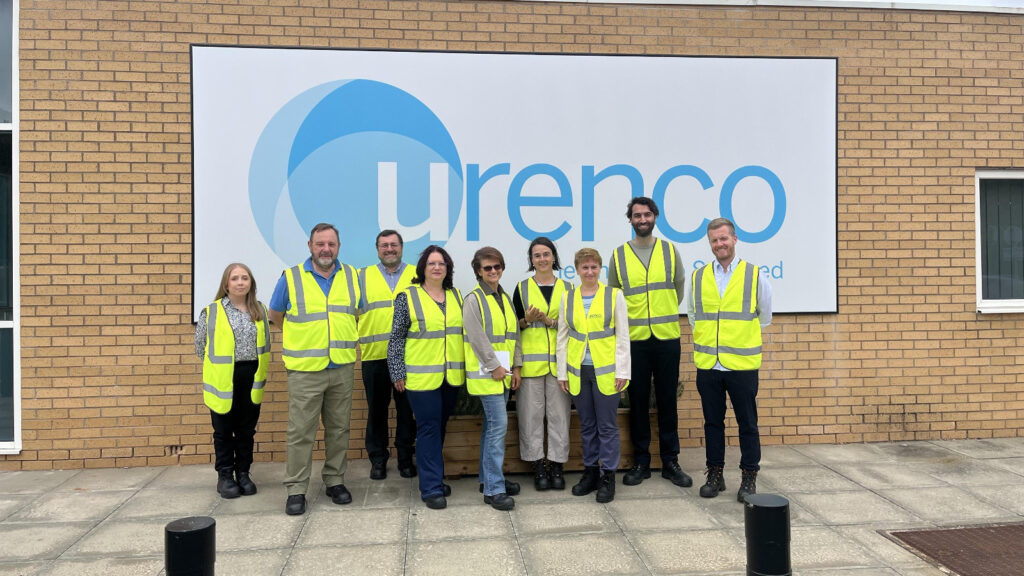
On 24 July 2026, I joined members of the Liverpool Consular Corps for a visit to Urenco UK’s Capenhurst site in Cheshire.
The visit offered a rare opportunity to see how one of the most sensitive parts of the civil nuclear supply chain operates.
It also provided a powerful lesson in Energy Diplomacy.
A culture built around responsibility
Urenco’s Capenhurst facility operates three uranium enrichment plants that support civil nuclear power generation around the world. Its current production capacity stands at 4,500 tonnes of separative work units per year. The site is also developing advanced fuel capabilities for newer reactor technologies.
What impressed me most was not one machine or process.
It was the culture.
Safety shaped every part of the visit.
Security remained visible without becoming theatrical.
Precision guided every stage of the operation.
Urenco representatives explained how different nuclear power stations require fuel services that meet precise technical specifications. The company therefore provides customer-specific enrichment services within strict licensed and regulated limits.
Capenhurst has also demonstrated the production of LEU+, enriched uranium containing between 5 and 10 per cent uranium-235. Urenco plans to use this capability to support current reactors and emerging designs.
Accountability was equally striking.
The product undergoes weighing at several stages before shipment because Urenco remains responsible for every gram of uranium under its control.
That sentence stayed with me.
In critical infrastructure, responsibility cannot be approximate.
Security is a discipline, not a slogan
Visitors entered a highly controlled environment.
We followed clear rules throughout the day, including restrictions relating to photography and security passes.
The only group photograph taken at the end of the visit respected those requirements.
Such safeguards may appear routine from the outside.
They are not.
They demonstrate how organisations protect people, materials, technology and public confidence.
That approach offers lessons far beyond the nuclear sector.
Banks protect capital.
Law firms protect Intellectual Property.
Insurers assess exposure.
Governments protect national infrastructure.
In every case, trust depends on systems that work even when nobody is watching.
Diplomacy inside the energy system
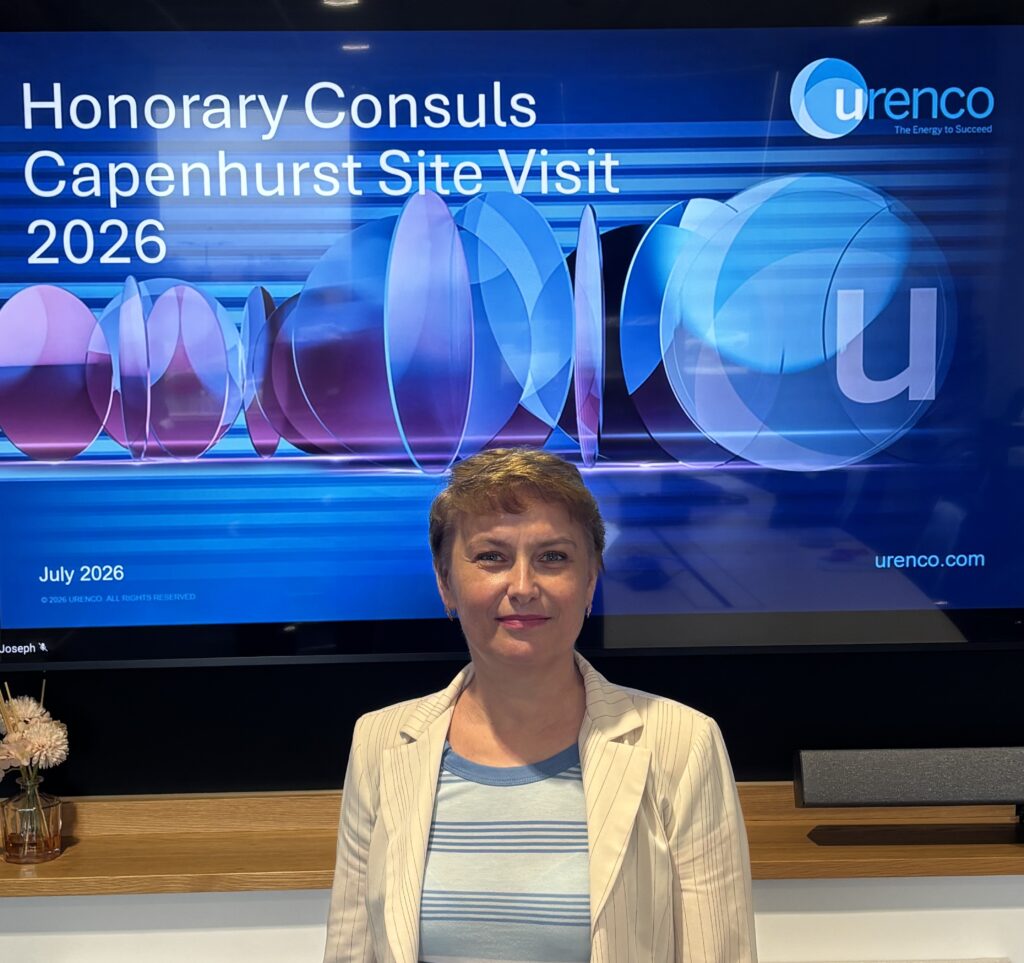
The visit was organised by Dorothea Muecke-Herzberg, Honorary Consul of Germany in Liverpool, for my colleagues at the Liverpool Consular Corps.
I was pleased to attend alongside:
• Kai Hughes, President of the Liverpool Consular Corps and Honorary Consul of Estonia
• Cerasela Răducănescu, Honorary Consul of Romania in Liverpool
• Peter Schriewersmann, Honorary Consul of Bulgaria
• Bärbel Herrmannspahn, German Honorary Consul for the West Midlands
• Professor David Joss, Professor of Physics at the University of Liverpool
• Dorothea Muecke-Herzberg, Honorary Consul of Germany in Liverpool
My sincere thanks go to Dorothea, the Liverpool Consular Corps and our Urenco hosts for creating such an informative visit.
Industrial engagement of this kind matters.
Consuls gain a better understanding of major employers and strategic sectors.
Companies meet representatives who connect regional expertise with international networks.
Conversations that begin during a site visit can later lead to research partnerships, commercial introductions or policy dialogue.
Diplomacy is strongest when it leaves the reception room and enters the real economy.
What this means for Moldova
The Republic of Moldova does not operate a nuclear power plant. However, that does not place nuclear energy outside its strategic interests. Moldova is assessing the possible inclusion of small-scale nuclear energy in its future mix while expanding renewables, storage and regional interconnections.
The most realistic near-term opportunity lies in regional cooperation.
Moldova and Romania have already explored future electricity supplies from expanded capacity at the Cernavodă nuclear power station, alongside skills development and possible Moldovan participation as a co-investor.
This matters because energy resilience does not require every country to own every asset.
It requires diversified sources.
Reliable interconnections.
Trusted suppliers.
Sound regulation.
Long-term partnerships.
The North West’s expertise in nuclear fuel, engineering, research, professional services and advanced manufacturing could support valuable exchanges with Moldova and its regional partners.
A bridge towards European integration
Moldova’s energy reforms form part of its wider European journey.
In 2025, the country ranked as the Energy Community’s leading reform performer for the second consecutive year. Priorities now include deeper electricity-market integration, stronger supply security and continued regulatory alignment.
New electricity connections with Romania will also strengthen Moldova’s access to Romanian and European energy systems. The Bălți–Suceava interconnection, for example, aims to improve resilience in Moldova’s northern regions.
Therefore, energy policy is not a separate technical matter.
It affects competitiveness.
It influences investor confidence.
It shapes foreign policy.
It also determines whether businesses can plan, produce and grow without unacceptable disruption.
The reconstruction of Ukraine
Ukraine’s reconstruction will place enormous demands on power generation, transmission, heating and resilient infrastructure.
The latest joint assessment by the Government of Ukraine, the World Bank, the European Commission and the United Nations estimates long-term energy reconstruction needs at almost $91 billion.
Nuclear power will remain part of that regional conversation.
Yet the larger lesson from Capenhurst concerns more than fuel.
Ukraine will need:
• secure supply chains
• trained specialists
• strong regulators
• insurance and project finance
• cyber protection
• transparent procurement
• responsible environmental stewardship
• public confidence
British businesses and institutions already possess substantial capability across these areas.
Moldova’s location, European integration and close links with Ukraine could make it a useful partner and platform for wider regional recovery.
Critical Infrastructure Diplomacy
This visit establishes a new pillar within the Building Bridges thought leadership series.
Critical Infrastructure Diplomacy examines how countries cooperate around the systems society cannot afford to lose.
These include:
• energy
• transport
• telecommunications
• water
• digital networks
• nuclear and radiological security
• emergency resilience
Energy Diplomacy sits at its centre.
It asks not only where power comes from, but who controls the technology, protects the infrastructure, insures the risk, develops the skills and maintains public trust.
That is the broader value of visits such as this.
They turn an industrial facility into a place of international learning.
They connect regional expertise with global priorities.
They remind us that resilience is built through relationships before a crisis begins.
Could Energy Diplomacy become the bridge that connects North West expertise with Moldova’s European future and Ukraine’s reconstruction?
Supported by ELS and MDBA
This article forms part of the Building Bridges thought leadership series and has been sponsored by Express Language Solutions Ltd and Moldovan Diaspora Business Alliance Ltd.

Established in May 2008, Express Language Solutions Ltd supports international organisations through professional interpreting, translation, transcription and cultural intelligence services in more than 150 languages.

Moldovan Diaspora Business Alliance Ltd connects entrepreneurs, professionals, institutions and communities, helping transform trusted relationships into practical international opportunities.
My sincere thanks go to both organisations for their continued support.
Connect and collaborate
Businesses, universities, energy specialists, insurers, lawyers, investors and professional advisers interested in Moldova or regional energy cooperation are encouraged to make contact.
Newsletter:
https://dina-railean.com/newsletter/
LinkedIn:
https://www.linkedin.com/in/dinarailean/
Facebook:
https://www.facebook.com/elsltduk/
TikTok:
https://www.tiktok.com/@dina.railean5
Organisations interested in sponsoring future Building Bridges articles are also invited to get in touch.