Building Bridges: Executive Insights by Dina Railean
How trust, communication and cultural intelligence are becoming the competitive advantage for internationally ambitious businesses
By Dina Railean
Trust – The Invisible Asset Behind International Growth
The fastest-growing businesses of the next decade will not succeed simply because they innovate more quickly, embrace artificial intelligence or secure greater investment.
Those factors undoubtedly matter.
Yet, in my experience across business, language and diplomacy, international success increasingly depends on something less tangible but far more enduring.
Trust.
Trust that encourages investors to commit capital with confidence.
Trust that enables businesses to enter unfamiliar markets.
Trust that underpins commercial contracts across different legal systems.
Trust that transforms an introductory meeting into a long-term strategic partnership.
Trust that allows organisations from different countries, cultures and languages to work together with confidence.
As global markets become increasingly interconnected, trust has become one of the most valuable commercial assets any organisation can possess.
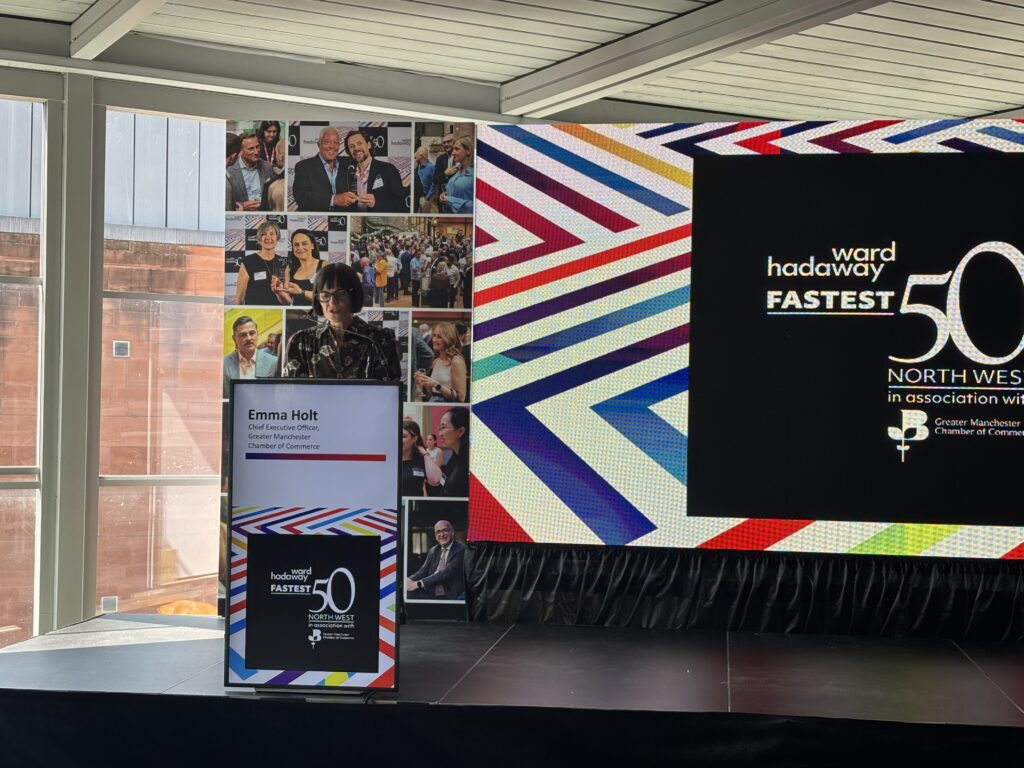
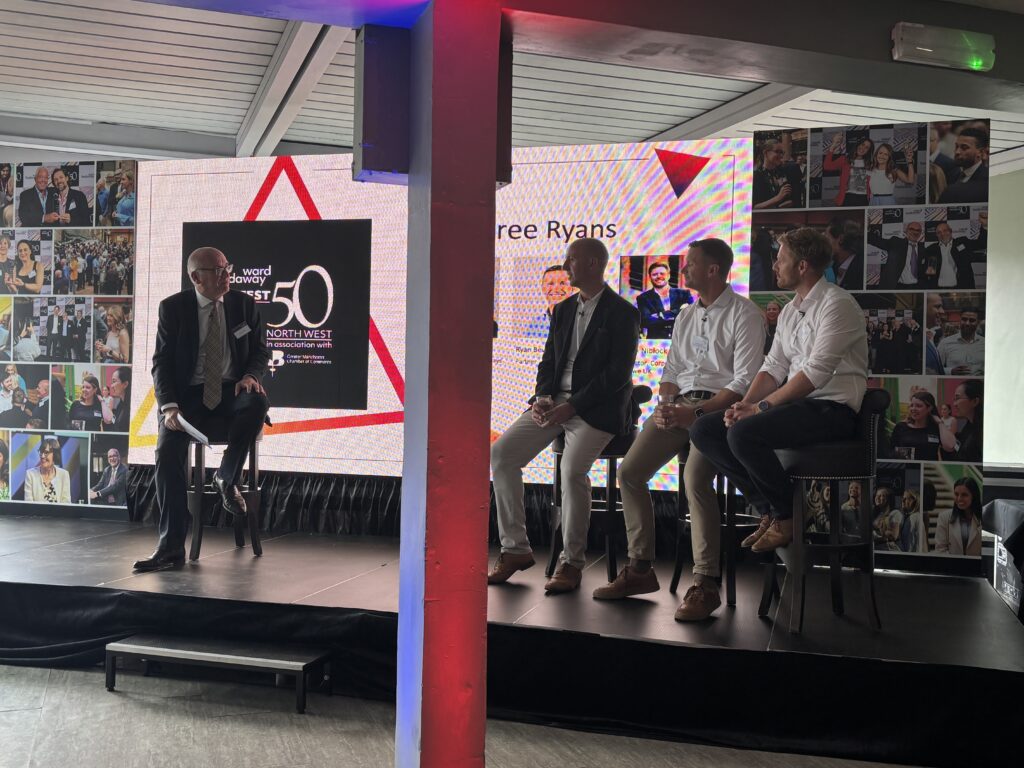
That is why attending Ward Hadaway’s Fastest 50, held in partnership with the Greater Manchester Chamber of Commerce, prompted me to reflect on a much broader question.
What truly enables ambitious businesses to grow internationally?
From my perspective, the answer extends well beyond finance, technology or market opportunity.
It begins with communication.
It develops through understanding.
And ultimately, it is sustained by trust.
These three elements have become the foundation upon which successful international businesses are built.
Growth Has Changed
For decades, business success was measured primarily through financial performance.
Revenue.
Profitability.
Market share.
While these remain important, they no longer tell the whole story.
Today’s fastest-growing organisations operate in an entirely different commercial landscape.
Many expand internationally much earlier than previous generations of businesses.
They recruit talent from around the world.
They establish international supply chains.
They negotiate contracts across multiple jurisdictions.
They attract overseas investment.
They collaborate with partners from different cultures and legal systems.
Increasingly, they compete on a global stage from the moment they begin to scale.
Growth has become international by default.
This evolution creates tremendous opportunities.
It also creates new responsibilities.
Business leaders must now think beyond products and services.
They must understand cultures.
Navigate different legal frameworks.
Build relationships that cross borders.
Communicate with clarity in environments where language, regulation and business etiquette may differ significantly from their own.
These capabilities are no longer optional.
They are becoming essential leadership skills.
As someone who has spent my career helping organisations communicate across languages and cultures, I have witnessed this transformation first-hand.
Clear communication is no longer simply a support function.
It has become a strategic business capability.
Businesses that recognise this are often better positioned to build lasting partnerships, reduce commercial risk and unlock opportunities that might otherwise remain beyond their reach.
Ward Hadaway’s Fastest 50 Is About More Than Rankings
Ward Hadaway’s Fastest 50 celebrates the North West’s fastest-growing privately owned businesses.
Recognition of commercial success is important.
However, what impressed me most was not simply the impressive financial achievements of the companies represented.
It was the shared ambition that connected them.
The willingness to innovate.
The confidence to invest.
The determination to look beyond familiar markets.
The understanding that sustainable growth depends upon relationships as much as results.
The event also demonstrated the importance of collaboration between organisations that strengthen the region’s business community.
The partnership between Ward Hadaway and the Greater Manchester Chamber of Commerce reflects exactly that principle.
Ward Hadaway has earned an outstanding reputation for supporting ambitious businesses throughout their growth journey. I have also had the privilege of knowing the firm as a long-standing client of Express Language Solutions Ltd. Our professional relationship has reinforced my appreciation of the vital role trusted legal advisers play in helping businesses navigate increasingly complex domestic and international environments.
The Greater Manchester Chamber of Commerce, the largest accredited Chamber of Commerce in the United Kingdom, continues to play an equally important role by connecting businesses, supporting exporters, encouraging inward investment and strengthening international commercial relationships.
Together, these organisations demonstrate that sustainable economic growth is rarely achieved in isolation.
It depends upon professional expertise.
Trusted advisers.
Collaborative networks.
And a shared commitment to helping businesses succeed.
That is precisely what events such as Fastest 50 celebrate.
Not simply financial performance.
But the ecosystem that enables businesses to thrive.
A Perspective Shaped by Several Roles
People occasionally ask how my different leadership roles connect with one another.
To me, they are connected by a single purpose.
Building understanding.
As Chief Executive Officer of Express Language Solutions Ltd, I have spent many years working with organisations that operate across borders, helping them communicate confidently in more than 150 languages.
Every assignment reinforces the same lesson.
Successful international relationships are rarely built on language alone.
They are built on trust.
Serving as Salford President of the Greater Manchester Chamber of Commerce has broadened my understanding of the opportunities and challenges facing businesses across one of the United Kingdom’s most internationally connected city regions.
Every conversation with entrepreneurs, exporters, manufacturers, professional advisers and investors reinforces how closely local prosperity is connected to international engagement.
In my work across business, language and diplomacy, I see this challenge from several connected positions.
Each provides a different perspective.
Together, they demonstrate one powerful truth.
International growth begins long before a contract is signed.
It begins when organisations understand one another.
Trust Is the New Competitive Advantage
Business leaders devote significant time to developing financial strategies.
Marketing strategies.
Export strategies.
Digital strategies.
Investment strategies.
All are essential.
Yet one strategic asset often receives far less attention than it deserves.
Trust.
Trust between businesses.
Trust between investors.
Trust between legal advisers and their clients.
Trust between insurers and policyholders.
Trust between employers and international talent.
Trust between governments and businesses seeking to invest across borders.
Trust between people from different cultures.
Without trust, opportunities become delayed.
Negotiations become more difficult.
Risk increases.
Relationships weaken.
With trust, organisations move more quickly.
Partnerships become stronger.
Innovation accelerates.
Investment follows.
In my experience, trust is rarely created by chance.
It is built deliberately through clear communication, cultural understanding, professional integrity and consistent relationships.
Language plays a central role in that process.
Not because translation alone creates trust.
It does not.
People create trust.
Professional communication allows that trust to flourish.
When organisations communicate accurately, respectfully and with cultural awareness, they reduce uncertainty.
When uncertainty is reduced, confidence grows.
And confidence remains one of the most valuable assets in international business.
This is why I believe communication should no longer be viewed simply as an operational necessity.
It should be recognised as a strategic investment.
Because in today’s international economy, communication is no longer just about exchanging information.
It is about creating confidence.
And confidence creates opportunity.
Every Fast-Growing Business Needs a Communication Strategy
One of the greatest misconceptions in international business is that communication begins once a deal has been agreed.
In reality, communication determines whether the deal happens at all.
Businesses invest considerable time developing financial forecasts, market entry plans and investment strategies.
Increasingly, they also invest in digital transformation, cybersecurity and artificial intelligence.
Yet relatively few organisations develop a communication strategy that supports international growth.
That omission can prove costly.
When businesses expand beyond their home market, they encounter far more than different languages.
They encounter different business cultures.
Different legal frameworks.
Different regulatory expectations.
Different approaches to negotiation.
Different attitudes towards risk.
Different ways of building professional relationships.
Success depends upon understanding these differences before they become obstacles.
That is where communication becomes a strategic capability rather than an operational service.
Over the years, I have seen organisations invest millions in international expansion while overlooking one of the most important elements of sustainable growth.
The ability to communicate with clarity, confidence and cultural awareness.
When communication is overlooked, misunderstandings become more likely.
Contracts require clarification.
Negotiations take longer.
Relationships become strained.
Opportunities are missed.
Conversely, organisations that communicate effectively create confidence.
They establish credibility.
They reduce commercial risk.
They build stronger relationships with clients, investors, regulators and professional advisers.
Communication, therefore, should never be viewed as an administrative function.
It is an investment in reputation.
It is an investment in trust.
Ultimately, it is an investment in growth.
Communication Has Become Business Infrastructure
The most successful international businesses rarely regard communication as a standalone activity.
Instead, it underpins every aspect of their operations.
Consider the complexity involved in international expansion.
A single transaction may involve lawyers, insurers, accountants, investors, regulators, suppliers and customers located across several countries.
Each participant brings different expectations, professional standards and cultural perspectives.
Clear communication becomes the thread that connects them all.
This is particularly evident in sectors where precision is essential.
Legal professionals rely upon accurate communication to protect their clients’ interests.
Insurance specialists depend upon clarity when assessing risk and resolving claims.
Healthcare providers must ensure patients understand complex medical information.
Investors require confidence before committing capital.
Manufacturers depend upon precise technical documentation.
Exporters need certainty that products comply with local regulations and international standards.
In each case, communication reduces uncertainty.
Reduced uncertainty strengthens confidence.
Confidence encourages investment.
Investment supports growth.
The relationship is remarkably simple.
Yet it is often overlooked.
As Chief Executive Officer of Express Language Solutions Ltd, I have observed how organisations increasingly recognise that communication is no longer simply about translating words.
It is about enabling decisions.
Reducing risk.
Protecting reputation.
Creating confidence.
That is why I believe communication has become part of modern business infrastructure.
It sits alongside legal expertise, financial planning and digital capability as one of the foundations of sustainable international growth.
Business, Diplomacy and Trust
Many people associate diplomacy exclusively with governments.
Increasingly, I believe diplomacy also has an important place within business.
Successful international organisations understand that commercial relationships are built long before contracts are signed.
They invest time in understanding markets.
They respect cultural differences.
They build credibility through consistent engagement.
They recognise that trust cannot be accelerated.
It must be earned.
Serving as Honorary Consul of the Republic of Moldova in Manchester has given me a deeper appreciation of how trust, dialogue and long-term relationships underpin international cooperation.
This diplomatic role is entirely separate from the commercial activities of Express Language Solutions Ltd.
That distinction is both important and necessary.
However, it has reinforced my conviction that successful international partnerships are built on understanding as much as opportunity.
Whether relationships develop between governments, businesses or investors, they begin with the same foundations.
Respect.
Credibility.
Communication.
Trust.
Those principles remain remarkably consistent regardless of sector or geography.
My role as Chair and Chief Executive Officer of the Moldovan Diaspora Business Alliance Ltd has strengthened this perspective further.
The Alliance exists to build meaningful connections between businesses, professionals and communities in the United Kingdom, Moldova and beyond.
Its purpose extends beyond networking.
It seeks to encourage collaboration.
Promote entrepreneurship.
Support investment.
Share knowledge.
Strengthen commercial relationships that create long-term value for everyone involved.
Once again, the common thread is trust.
Greater Manchester: An International Gateway for Growth
Greater Manchester has long been recognised as one of the United Kingdom’s leading centres for commerce, innovation and enterprise.
Today, its influence extends far beyond the region itself.
Businesses across Greater Manchester increasingly operate within international markets.
Universities attract students, researchers and entrepreneurs from around the world.
Professional services firms advise clients across multiple jurisdictions.
Advanced manufacturers export globally.
Technology companies collaborate internationally from the earliest stages of growth.
As Salford President of the Greater Manchester Chamber of Commerce, I have the privilege of engaging with organisations of every size, from ambitious start-ups to established international businesses.
One message emerges consistently.
The organisations best positioned for long-term success are those that think internationally while remaining firmly connected to their local business community.
The Greater Manchester Chamber of Commerce continues to play an essential role in supporting that ambition.
As the largest accredited Chamber of Commerce in the United Kingdom, it helps businesses develop new markets, strengthen international relationships, encourage inward investment and navigate the opportunities presented by global trade.
This work has never been more important.
International competitiveness is no longer determined solely by geography.
It is determined by connectivity.
Connectivity between people.
Between organisations.
Between markets.
Between ideas.
Communication is therefore no longer simply a business service.
It has become part of the infrastructure that enables regional economic growth.
That distinction matters.
Because regions that communicate effectively compete more effectively.
What This Means for Business Leaders
Every organisation is different.
Every market presents its own challenges.
Yet I believe the questions facing today’s business leaders are becoming increasingly similar.
How do we expand internationally with confidence?
How do we reduce risk?
How do we attract investment?
How do we build trusted partnerships?
How do we compete in increasingly complex global markets?
Technology will continue to shape the future of business.
Artificial intelligence will transform many aspects of professional life.
Digital innovation will continue to accelerate.
Yet none of these developments will replace the importance of human relationships.
People invest in people.
Businesses partner with organisations they trust.
Investors seek confidence before committing capital.
Lawyers advise clients based on clarity.
Insurers assess risk through accurate information.
International trade depends upon mutual understanding.
Communication remains the common denominator.
For me, this is where leadership becomes particularly important.
Leadership is not simply about making decisions.
It is about creating the conditions in which others can succeed.
That includes creating environments where communication is clear, cultural intelligence is valued and trust becomes a strategic priority rather than an afterthought.
The organisations that understand this today will be better prepared for tomorrow’s international economy.
Looking Forward
The businesses recognised at Ward Hadaway’s Fastest 50 represent far more than commercial success.
They represent confidence.
Innovation.
Resilience.
International ambition.
Their achievements deserve to be celebrated.
Yet perhaps their greatest accomplishment lies not only in what they have already achieved, but in the opportunities they are preparing to embrace.
The next chapter of business growth will look very different from the last.
International markets will become increasingly interconnected.
Artificial intelligence will continue to transform industries.
Supply chains will evolve.
New trade relationships will emerge.
Investor expectations will continue to change.
Against this backdrop, one principle will remain constant.
Business will always be built by people.
People who negotiate.
People who lead.
People who invest.
People who collaborate.
People who place their trust in one another.
Technology can accelerate communication. It cannot replace understanding.
Data can inform decisions. It cannot build relationships.
Artificial intelligence can process information. It cannot earn confidence.
That responsibility will always belong to people.
The organisations that thrive over the next decade will be those that understand this distinction.
They will invest not only in innovation, but also in relationships.
Not only in technology, but also in trust.
Not only in global expansion, but also in cultural intelligence.
Because sustainable growth has never been measured solely by financial performance.
It has always been measured by the strength of the relationships that support it.
A Personal Reflection
Throughout my career, I have been fortunate to work alongside business leaders, entrepreneurs, legal professionals, insurers, healthcare providers, academics, diplomats and community organisations.
Each experience has reinforced the same belief.
Although the environments differ, the principles rarely do.
As Chief Executive Officer of Express Language Solutions Ltd, I have seen how clear communication enables organisations to operate confidently across more than 150 languages and cultures.
As Salford President of the Greater Manchester Chamber of Commerce, I have witnessed the determination and innovation of businesses that continue to strengthen our regional economy while building international partnerships.
Serving as Honorary Consul of the Republic of Moldova in Manchester has provided me with a deeper appreciation of how dialogue, mutual respect and long-term relationships contribute to international cooperation. This diplomatic role remains entirely separate from the commercial activities of Express Language Solutions Ltd, yet it has reinforced my conviction that enduring partnerships are built on understanding as much as opportunity.
As Chair and Chief Executive Officer of the Moldovan Diaspora Business Alliance, I have seen how communities can become powerful catalysts for entrepreneurship, investment and international collaboration when united by a shared purpose.
As a Council Member of The Insurance Institute of Manchester, I continue to engage with a profession founded upon integrity, professionalism and trust, values that underpin every successful commercial relationship.
Viewed individually, these roles may appear quite different.
Together, however, they have shaped one consistent perspective.
Business is ultimately about people.
And people succeed when they understand one another.
The Principle That Guides My Work
People often ask whether there is a common thread connecting my work across business, professional leadership, community engagement and diplomacy.
There is.
It is remarkably simple. Lasting business success begins with trust.
Trust begins with understanding.
Understanding begins with communication.
This philosophy has guided my work for many years.
It influences how I lead.
How I build partnerships.
How I approach international collaboration.
How I support organisations seeking to expand beyond their home markets.
Whether advising businesses through Express Language Solutions Ltd, engaging with the Greater Manchester business community, supporting the Moldovan Diaspora Business Alliance or serving in my honorary diplomatic capacity, I remain convinced that communication is never merely an exchange of information.
It is the foundation upon which confidence is built.
And confidence is the foundation upon which sustainable international business is built.
For me, that is where leadership begins.
Not with authority.
But with understanding.
Proudly Supported by the Moldovan Diaspora Business Alliance
This thought leadership article is proudly sponsored by the Moldovan Diaspora Business Alliance (MDBA), supporting international trade, foreign direct investment, business leadership and stronger commercial relationships between the United Kingdom, Moldova and global markets.
I extend my sincere appreciation to MDBA for supporting informed discussion around international trade, investment, entrepreneurship and cross-cultural collaboration.
MDBA was established with a clear vision: to build meaningful bridges between businesses, professionals and communities while strengthening commercial, educational and cultural links between the United Kingdom, Moldova and international markets.
That vision aligns closely with my own belief that sustainable economic growth is achieved not through competition alone, but through collaboration.
By supporting thought leadership, MDBA is helping to create a platform where ideas can be exchanged, partnerships can be formed and businesses can learn from one another’s experience.
In an increasingly interconnected world, these conversations have never been more valuable.
Become a Thought Leadership Partner
Thought leadership has the greatest impact when it brings together diverse perspectives.
If your organisation believes in the importance of international trade, innovation, professional excellence and responsible business leadership, I invite you to become part of this conversation.
Future articles within the Building Bridges series will explore issues that shape the international business landscape, including:
- international trade and investment
- foreign direct investment
- legal and regulatory developments
- insurance and risk management
- healthcare and life sciences
- education and skills
- international diplomacy
- leadership
- cross-cultural communication
- emerging global opportunities
I welcome collaboration with organisations that share these values.
Whether you represent a law firm, financial institution, insurer, university, manufacturer, healthcare provider, professional body, technology company, exporter, investor or multinational business, there are many opportunities to contribute to informed discussion while supporting high-quality executive thought leadership.
Together, we can encourage dialogue that benefits businesses, communities and international partnerships alike.
Let’s Continue the Conversation
If this article has prompted you to reflect on the future of international business, I would be delighted to hear your perspective.
To continue the conversation:
- Connect with me through www.dina-railean.com.
- Learn more about the work of Express Language Solutions Ltd in supporting organisations operating across languages, cultures and jurisdictions.
- Explore opportunities to sponsor future articles or collaborate through the Building Bridges thought leadership series.
Meaningful partnerships often begin with a single conversation.
Perhaps this is ours.
A Question for Business Leaders
As international markets become increasingly interconnected, what do you believe will become the defining competitive advantage over the next decade?
Will it be access to capital?
Technological innovation?
Artificial intelligence?
Or will it be something less visible, yet ultimately more valuable?
The ability to build trust across borders, cultures and languages.
I believe the future will belong to organisations that recognise these are not competing priorities.
The strongest businesses will combine innovation with integrity, technology with trust and global ambition with genuine understanding.
International business has never moved more quickly.
Yet the principles that sustain it have remained remarkably consistent.
Trust still matters.
Relationships still matter.
Communication still matters.
In an age increasingly shaped by artificial intelligence, automation and digital transformation, these fundamentally human qualities will become more valuable, not less.
Throughout my work across business, professional leadership, community engagement and diplomacy, I remain optimistic about the future.
Not because international business is becoming easier.
But because organisations that invest in understanding, collaboration and trust will always find opportunities where others see obstacles.
That is the future I believe in.
It is the future I am committed to helping build.
And I hope it is a future we will build together.
Five Questions Every International Business Should Ask
Before expanding internationally, ask yourself:
✔ Do our communications inspire confidence?
✔ Are we building relationships or simply completing transactions?
✔ Do international partners understand our values as well as our products?
✔ Are we investing in cultural intelligence as well as technology?
✔ Are we creating trust at every stage of the customer journey?
I invite you to connect with me and join the conversation.
Connect with me
🌐 Website: www.dina-railean.com
💼 LinkedIn: https://www.linkedin.com/in/dinarailean/
🌍 Express Language Solutions Ltd: https://www.expresslanguagesolutions.co.uk
🤝 Moldovan Diaspora Business Alliance: https://moldovan-diaspora.com
Together, let’s build stronger businesses, stronger partnerships and stronger international relationships.
Because lasting business success begins with trust.
About the Author
Dina Railean is the Chief Executive Officer of Express Language Solutions Ltd, Salford President of the Greater Manchester Chamber of Commerce, Honorary Consul of the Republic of Moldova in Manchester, Chair and Chief Executive Officer of the Moldovan Diaspora Business Alliance, and a Council Member of The Insurance Institute of Manchester.
Through her work across business, diplomacy and professional leadership, she writes about international trade, foreign direct investment, cross-cultural communication, leadership and the strategies that help organisations build trust and succeed across borders.